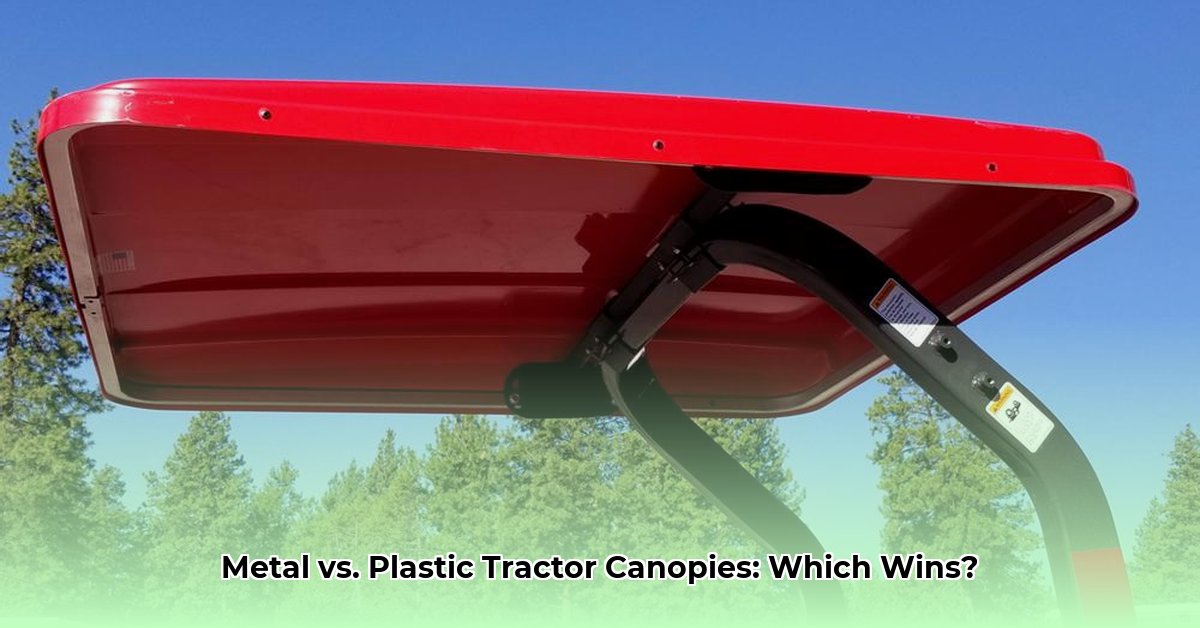
Choosing the right tractor canopy is crucial for both operator comfort and equipment longevity. This comparative analysis explores the key advantages and disadvantages of metal and plastic canopies, considering factors like cost, durability, sustainability, and regulatory compliance to help you make an informed decision. For more canopy options, check out tractor canopies.
Metal Canopies: Durability Meets Environmental Concerns
Metal tractor canopies, typically constructed from steel or aluminum, are renowned for their robust construction and extended lifespan. Their superior strength offers excellent protection against harsh weather conditions, including strong winds and hail. This inherent durability translates to lower long-term replacement costs, potentially offsetting the higher initial investment.
Advantages:
- Exceptional Durability: Metal canopies are highly resistant to damage, outlasting plastic alternatives in many cases. They offer superior protection from the elements.
- Longevity: With proper maintenance, a metal canopy can last for many years, reducing the frequency of replacements.
- Superior Protection: They provide more effective shielding from sun, rain, and debris.
Disadvantages:
- Higher Initial Cost: Metal canopies typically command a significantly higher upfront price compared to plastic alternatives.
- Increased Weight: Their substantial weight can add stress to the tractor's structure and complicate installation.
- Maintenance Requirements: Regular maintenance, such as rust prevention treatments, is necessary to ensure longevity.
- Environmental Impact: Metal production and disposal have a considerable environmental footprint, including energy consumption and potential for pollution. A full lifecycle assessment (LCA) is needed for a complete understanding.
Plastic Canopies: Affordability Balanced Against Limitations
Plastic canopies, often made from high-density polyethylene (HDPE) or polycarbonate, offer a more budget-friendly alternative to metal. Their lighter weight simplifies installation and reduces strain on the tractor. However, their reduced durability compared to metal may require more frequent replacements over time.
Advantages:
- Lower Initial Cost: Plastic canopies are significantly cheaper upfront than metal canopies.
- Lightweight: Their reduced weight facilitates easier installation and minimizes stress on the tractor.
- Ease of Installation: Installation is generally quicker and simpler than with metal canopies.
Disadvantages:
- Reduced Durability: Plastic canopies are more susceptible to damage from impacts and extreme weather conditions – particularly cracking and breakage.
- Shorter Lifespan: Their lifespan is typically shorter than metal canopies leading to more frequent replacements.
- Limited Protection: They may offer less protection against severe weather events compared to metal canopies.
- Environmental Concerns: While initial production may have a lower energy footprint, plastic canopies face challenges with recycling and potential environmental pollution if improperly disposed. A full Lifecycle Assessment (LCA) is crucial.
Sustainability: A Lifecycle Perspective
The environmental impact of both metal and plastic canopies warrants careful consideration. Metal canopies entail substantial energy consumption during manufacturing and potential pollution from extraction and processing. However, their long lifespan can mitigate overall environmental effects. Plastic canopies might have lower manufacturing energy use, but their shorter lifespan necessitates more frequent production and disposal, raising concerns about plastic waste and pollution. A comprehensive LCA, taking into account raw material extraction, manufacturing, use, and disposal, is essential for a truly informed comparison. Dr. Anya Sharma, Environmental Scientist at the University of California, Berkeley, emphasizes, "A complete lifecycle assessment is crucial for making a truly sustainable choice. The hidden environmental costs associated with both materials must be considered."
Cost Analysis: Initial vs. Lifecycle Costs
While plastic canopies offer a lower initial cost, the shorter lifespan often necessitates more frequent replacements, potentially negating the initial savings. Metal canopies, though more expensive upfront, offer a longer lifespan and may reduce overall long-term costs. A comprehensive lifecycle cost analysis considering initial purchase price, maintenance, repairs, and eventual replacement costs is critical for a sound economic evaluation. Professor David Miller, Agricultural Economics, Purdue University, states, "Farmers should prioritize a lifecycle cost analysis when choosing a canopy. The initial price is only one piece of the puzzle."
Regulatory Compliance and Future Trends
It's crucial to comply with all relevant local, regional, and national regulations regarding tractor canopy materials and safety. These regulations can vary greatly, covering aspects such as material safety, installation requirements, and end-of-life disposal. Future regulations may increasingly emphasize sustainability, potentially influencing the choice of canopy materials.
Actionable Recommendations
| Feature | Metal Canopy | Plastic Canopy | Considerations |
|---|---|---|---|
| Durability | Excellent | Good | Prioritize metal in harsh climates, plastic in milder ones. |
| Initial Cost | High | Low | Balance upfront costs with long-term replacement needs. |
| Weight | Heavy | Light | Consider tractor structural capacity. |
| Maintenance | Moderate (rust prevention) | Low | Factor maintenance costs into your long-term budget. |
| Environmental Impact | Higher (production & disposal) | Moderate (production & disposal) | Consider LCA data and recycling options. |
| Lifespan | Long | Moderate | Evaluate the expected lifespan based on your usage. |
Ultimately, the choice between metal and plastic tractor canopies hinges on a careful assessment of your individual needs, budget, and environmental priorities. A thorough consideration of durability, cost, sustainability, and regulatory compliance is crucial for making an informed and responsible decision.